
Mental health & well-being
Persistent nausea can be a strain not only physically, but also mentally. Being mindful of your mental well-being can help you experience a more stable pregnancy.
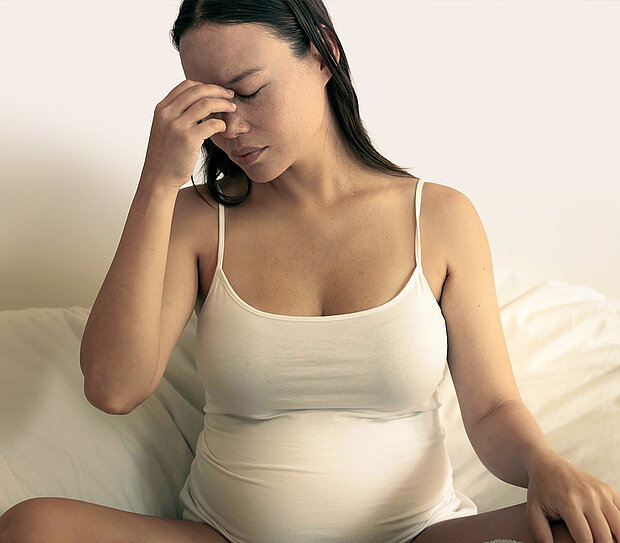
Take emotional stress seriously
Morning sickness not only has physical effects, but can also be emotionally draining. Feelings such as exhaustion, irritability, helplessness, or sadness are common and understandable reactions to persistent discomfort. The internal or external pressure to experience pregnancy as an exclusively positive experience can be particularly stressful. However, differing feelings are normal and should be taken seriously instead of being suppressed or judged.
Interaction between mind and body
Mental stress can exacerbate physical symptoms such as nausea, while conversely, persistent physical complaints can affect mental stability. This reciprocal relationship is well known and is not a sign that complaints are "imaginary." Consciously managing stress, getting enough rest, and finding small ways to relieve stress in everyday life can help break this cycle.
Self-care, relief, and setting boundaries
A key component of well-being is realistic self-care. This includes recognizing your own limits, adjusting your expectations of yourself, and accepting support. Reducing commitments, making clear agreements in your private and professional life, and establishing small, beneficial rituals can relieve stress and contribute to stability.
Seeking and accepting support
Open conversations with loved ones, midwives, or medical professionals can provide relief and reassurance. If psychological stress persists, fears intensify, or everyday life becomes difficult to cope with, professional support is an important and sensible step. Mental health is an essential part of a healthy pregnancy and deserves just as much attention as physical symptoms.
Did you know?
Severe stress can increase the perception of nausea. Conversely, persistent nausea can itself lead to psychological stress. This connection has been well researched and is by no means "all in the mind."

This article has been written in accordance with scientific standards and has been thoroughly checked for accuracy by ITF Pharma GmbH.
Published on 26.02.2026
Sources
- Piri et al. The effect of hope-based counseling on perceived stress and the quality of life in pregnant women experiencing nausea and vomiting: a randomized control trialBMC Psychology (2025) 13:880
- Buckwalter, J. Galen, and Stephen W. Simpson. "Psychological factors in the etiology and treatment of severe nausea and vomiting in pregnancy." American journal of obstetrics and gynecology 186.5 (2002): S210-S214.